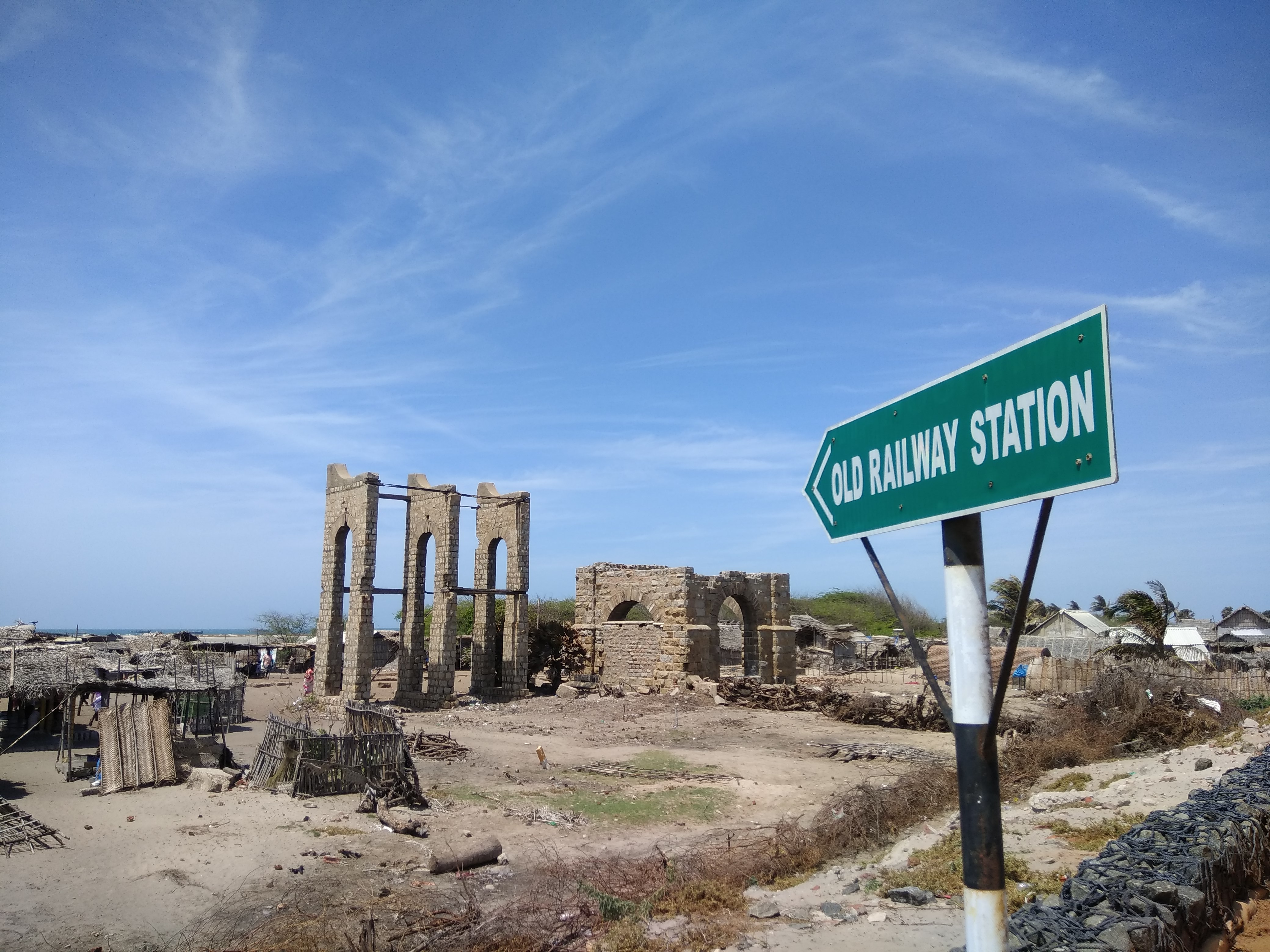
The bus drops you at what used to be the centre of town, and you stand alone on cracked asphalt while the engine cools behind you—a sound like something breathing out for the last time. Ahead, the road simply surrenders to sand and scrub, as if the earth itself gave up trying to remember what this place was. The sky is enormous here, bleached almost white at the edges, and the sea—which is why you came, which is why anyone comes—is such a clean, unsettling blue that it looks photoshopped, untrustworthy. A dog sleeps in the shadow of a rusted shop sign. Somewhere, a bell is ringing, though there's no one to ring it. This is Dhanushkodi, the town that drowned in 1964 and never quite decided whether to come back up for air. The locals call the cyclone that destroyed it the 'Great Deluge'—Periya Kaval—but they say it quietly, the way you'd mention an old grief that still aches in certain weather.
The story everyone tells starts with a bridge and a choice. In 1914, the British connected Rameswaram to Dhanushkodi by rail, opening up what was already a sacred pilgrimage town—the southernmost tip of India, where legends say Rama himself stood and built a bridge to Lanka. The town boomed. Traders came. Temples multiplied. Fishing boats crowded the harbour. By the 1960s, Dhanushkodi was humming with the kind of certainty that comes from believing you'll always exist exactly as you are. Then, on December 22, 1964, a cyclone with the force of judgment decided otherwise. It didn't just flatten buildings—it erased them, pulled the town apart like a child unmaking a sandcastle, and scattered the pieces into the Arabian Sea. The railway bridge, which had connected this place to the world, became the thing that couldn't save it. More than 1,800 people died. The survivors left. And the town, stubbornly, stayed behind—a skeleton in good light, a question mark in bad light.
You meet Raman at a tea stall (there are maybe three functional stalls in Dhanushkodi, and they're easy to spot because there are people sitting near them). He's seventy-two, lived through the cyclone, came back years later, and never left again. His hands shake slightly when he pours the chai, which is hot and perfectly bitter, cut with just enough milk to make it copper-coloured. He doesn't charge you full price—the etiquette in dying towns is that you're not here for the tea, you're here for the story. 'Everyone ran,' he says, not unkindly. 'I ran too. But when I came back, I saw that the sea was still here, and the temples were still here, broken but here. What else was I supposed to do? Go live in a city where nobody knows me?' The tea tastes like resignation and continuity both. Further down, at the small vegetable market (three vendors, same people every day), a woman is selling fish wrapped in newspaper from that morning. The fish are impeccable, silver-bright, caught by one of the dozen boats that still venture out. When locals talk about 'the old town,' they mean the photographs—they have a few, kept in plastic covers, showing streets crowded with people, cars, bicycles, a temple tower that was taller than anything now standing. But they're not nostalgic, exactly. It's more like how you might look at pictures of yourself as a child: recognizing yourself, but unable to fully remember the feeling of being that person.
Here's what tourists do wrong at Dhanushkodi: they expect it to look sad. They come with cameras ready to capture 'ruins' and 'abandonment' as if sadness is a photogenic quality, and they're disappointed when they realize the place simply doesn't perform melancholy. It's too honest for that. The best time to visit is October through February—monsoon (June to September) makes the roads treacherous and the sea even angrier—but understand that 'best' is relative. There will be days when the wind is enough to make you question your choices. The main temple, dedicated to Ramanathaswamy, is still functional, still staffed, still receiving daily worship, which means Dhanushkodi isn't a ghost town the way tourists imagine ghost towns. It's a town that lost its people but kept its gods, which is an entirely different thing. Skip the main temple in the first hours after sunrise—that's when the local devotees come, and they don't need an audience. Instead, wait until mid-morning, when you can sit with the priest and have a real conversation about what it means to maintain faith in a place that's been so thoroughly tested. He'll probably offer you coconut water. Accept it.
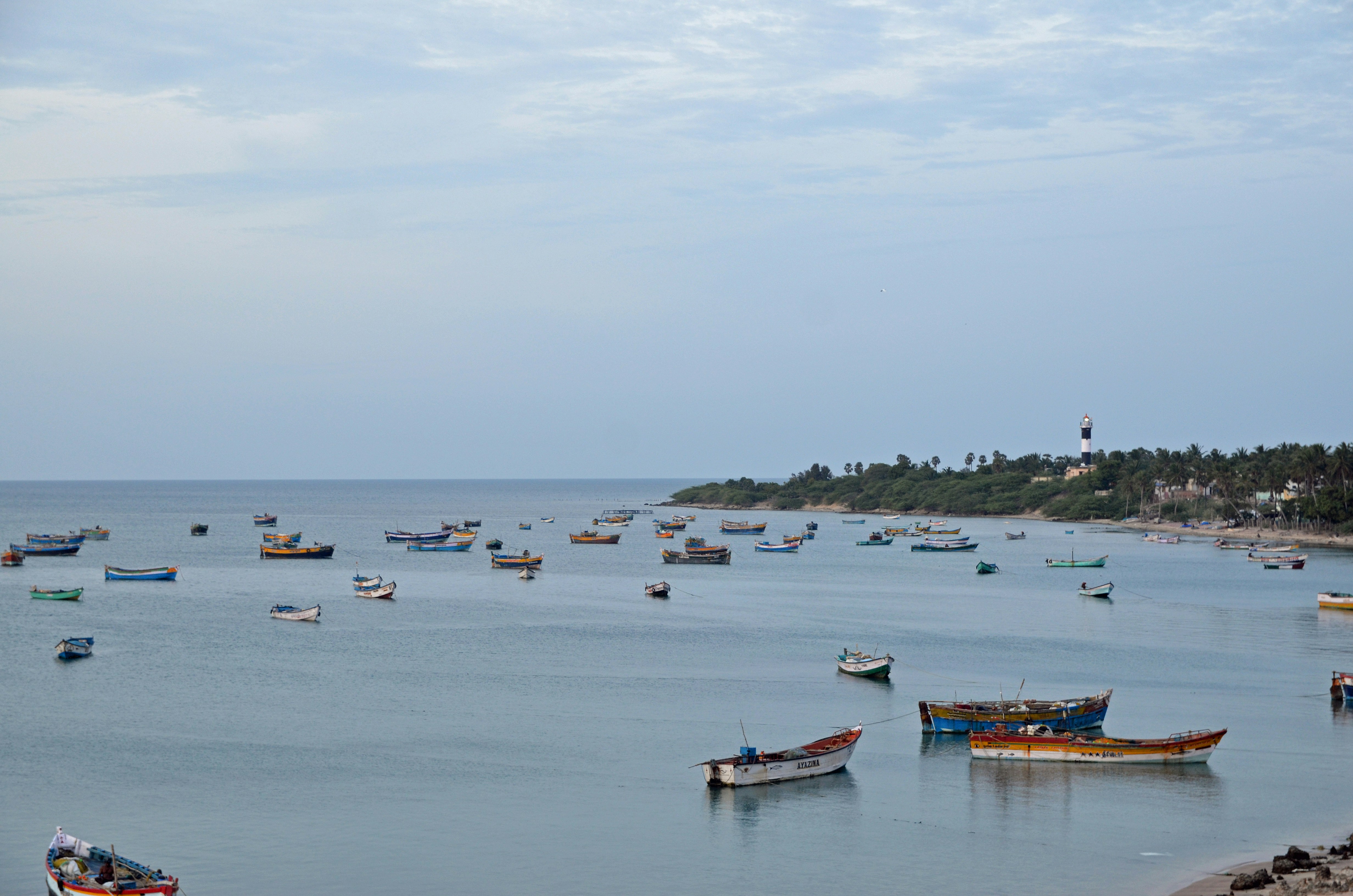
The lighthouse stands at the tip of the peninsula, and reaching it requires a walk across sand that gets hotter the closer you get to the sea—a walk that feels intentional, like the landscape is testing your commitment to understanding this place. When you reach it, the lighthouse is smaller than you expected, the paint peeling in theatrical strips, the stairs inside narrow enough that you touch both walls simultaneously. Climb them anyway. From the top, the view rewrites everything you thought you knew: the sea stretches without mercy in three directions, and you can see where the old town used to be—not as buildings, but as gaps in the landscape, as stretches of sand that are slightly different in colour, slightly more organized, like the earth remembering streets. The fishermen's ruins are scattered across the western side, concrete foundations and broken walls that jut out of the sand like a skeleton's fingers. Locals say—and there's dark humour in this—that the cyclone didn't bury the town so much as return it to the sea. Which is technically, geographically accurate. Which also means this place was only ever borrowed from water, never truly owned.
The light changes here in ways you won't see in other towns. At dawn, it's almost apologetic, pale and uncertain, like it's asking permission to arrive. By noon, it's aggressive and honest, flattening everything into sharp contrasts. At dusk—and this is the real reason to stay late—it turns the sea into hammered copper, and the broken walls of the temples cast shadows that are somehow more present than the buildings themselves. You'll find yourself standing somewhere in late afternoon, the salt wind in your face, the light doing its slow evacuation, and you'll understand without anyone explaining it that Dhanushkodi isn't asking you to feel sad. It's asking you to feel precise. To notice the difference between destruction and change. To sit with the fact that places can be important precisely because they're incomplete, because they're teaching you something about impermanence that no functioning city ever could. This is also why you'll find yourself coming back. You'll mention it to friends and they'll say 'Oh, that abandoned place?' and you'll say yes, but you'll know what they mean isn't what the place actually is.
Weeks later, back in your city where the noise is efficient and the streets are confident, you'll remember the sound of the wind at Dhanushkodi—not a howling kind of wind, but a wind that sounds like deliberation, like the sea is still negotiating with the land about what belongs where. You'll remember Raman's tea. The copper colour. The way the dog slept through your entire visit without opening its eyes, as if it had given up on the idea that anything was coming or going. And you'll feel something specific: not sadness, not wanderlust, but a kind of clarity. The clarity that comes from standing in a place that has already lost everything and chosen to stay anyway. If this has sparked something in you—that particular longing for a place that doesn't perform for you, that simply exists in its complexity—the team at Dream Destiny Trips has a tendency to turn these sparks into actual itineraries. Reach out and watch what happens.