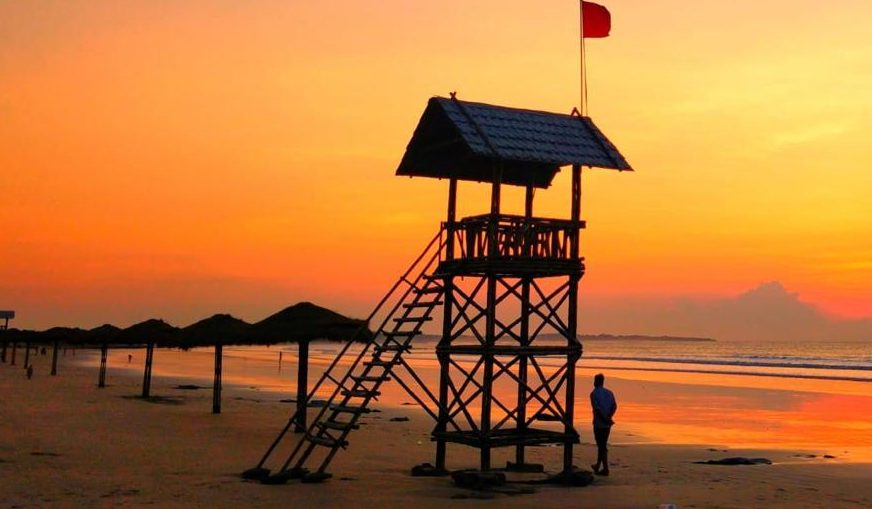
The bus coughs to a stop at the edge of the island, and you step directly into a contradiction. Behind you, Gujarat's dusty mainland. Ahead, a narrow strip of land where Portuguese-era whitewashed buildings lean against each other like old friends sharing secrets, their terracotta roofs bleeding rust into the salt air. The sea here isn't the grey-brown thing you know from Mumbai or Goa—it's an almost violent turquoise, the kind of blue that makes you squint and wonder if the water is actually that colour or if the light is just playing an elaborate prank. A fishing net hangs from a wooden frame on the beach, untouched and geometric against the chaos of the horizon. An old man sits beneath it smoking a beedi, watching tourists fumble with their phones, completely unmoved. This is Diu in its truest form: a place that has been waiting for something for so long that it barely notices when you arrive.
The story of Diu is written in the stones of the fort, and if you're lucky enough to meet Rajesh—a heritage guide who's been walking these ramparts for thirty years—he'll tell it to you not as history but as gossip. The Portuguese arrived in 1535, he explains, and they stayed for 460 years, longer than they stayed almost anywhere else in India. But here's what tourists don't understand: they didn't conquer Diu so much as adopt it. Walk through the fort's gates, past the massive cannons still aimed at an enemy that stopped coming centuries ago, and you'll see a place that chose to become something else rather than resist. The churches have Hindu temples beside them. The Portuguese colonial buildings house Indian families who've hung laundry from the windows and repainted the shutters in colours that would make the original architects weep. Rajesh points out a particular doorway where, during Navratri, local women still perform garba in the courtyard of what was once a Portuguese administrative building. 'They tried to make us forget who we were,' he says, lighting a cigarette. 'So we made sure they'd never forget we were here.' That contradiction—that casual, unstudied blend of resistance and acceptance—is Diu's real fortress.
The best meal I've had in Diu wasn't at any of the restaurants lining the main bazaar. It was at Poornima's kitchen, a converted ground floor of a heritage house in the old quarter, accessible only if you know to ask the vegetable vendor where she makes her crab curry. Poornima herself doesn't speak much English—chai pe charcha, gossip over tea, is her preferred communication method—but her hands speak fluent in coconut and chilli and fish stock. She'll sit you at a wobbly table, serve you a plate of rice that's been cooked with ghee and curry leaves, and then place in front of you a bowl of crab that tastes like the sea decided to become edible. The curry is the colour of rust and turmeric, gravy thick enough to coat the back of a spoon, each crab claw pulling apart with a whisper. There's no menu. There's no price posted. You eat what she makes that day, and you pay what seems fair. The woman next to you is a retired schoolteacher from Ahmedabad. The fisherman in the corner has been coming here for twelve years. Nobody takes photos. Everyone comes back.
Here's what I wish someone had told me on my first visit: skip the main beach near the town centre. It's lined with shacks selling the same fried fish to the same tour groups, and yes, the sea is still beautiful, but it's beautiful the way a supermodel is beautiful—objectively, but from a distance. Instead, rent a scooter (negotiate with Vikram, not the official rental place; he charges fair rates and asks about your life), and head north toward Ghogla beach. The ride there takes twenty minutes along roads so empty and tree-lined that you'll forget you're on an island. Also—and I say this with the affection of someone who's been bitten multiple times—the mosquitoes are fierce in September and October. Bring repellent that actually works, not the fancy natural kind that smells like lavender wishes. October is genuinely the best month: the monsoon has washed everything green, the humidity has dropped, and the sea is still warm enough to swim. The WiFi at most guesthouses is a polite fiction. If you need to actually work, don't come. Come to forget that work exists.
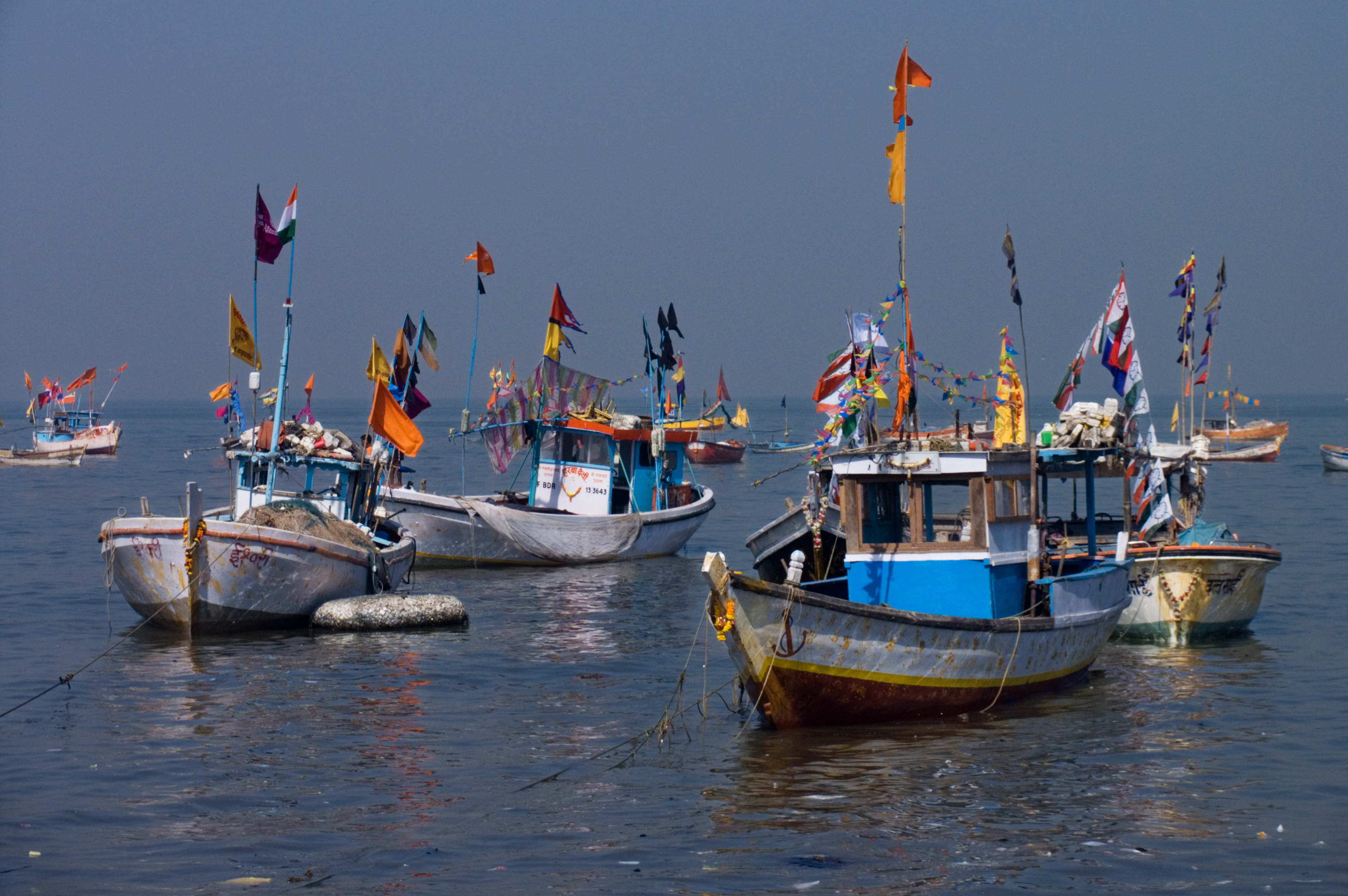
Diu has a particular kind of silence that follows the sunset. By seven in the evening, the fishing boats have returned, their nets spread on the beach like sleeping dragons. The Portuguese buildings, lit from below by strings of yellow bulbs, look like they're blushing at having been beautiful for so long. There's a chai stall called Anita's, run by a woman who refuses to water down her milk—a revolutionary stance in most of India—where local men gather to argue about cricket, politics, and whether the monsoon will be good this year. You can sit there nursing a cup for an hour for thirty rupees, and no one will rush you. A young couple will sit on a bench nearby, not touching but close, watching the sea with the intensity of people trying to memorise something they're afraid of forgetting. A child will run past selling coconuts, asking you where you're from and then disappearing before you can answer. This rhythm—this slow, unhurried accumulation of small moments—is what Diu actually offers. Not Instagram moments, but the kind of memories that ambush you on grey afternoons months later, when you're sitting in traffic and suddenly remember the exact temperature of the sea at 5 p.m., or the particular rasp in Rajesh's voice when he talked about Portuguese conquest, or the taste of that crab curry you still can't quite replicate.
The interior of the island, beyond the tourist zones, reveals something most guidebooks miss: Diu is profoundly agricultural. Coconut groves stretch inland, and the agricultural areas grow a particular kind of cotton that's famous among Indian textile makers. If you venture beyond the fort and the beaches, you'll find small villages where life moves according to harvest cycles, not tourist seasons. The women here wear a different kind of sari—brighter, with more gold embroidery—and the local language has a rhythm that's distinctly different from Gujarati proper. There's a small agricultural cooperative that sells coconut oil and jaggery at prices that should legally be called theft, and the owner, a woman named Savitri, will spend forty minutes explaining the difference between single-pressed and double-pressed oil if you ask. Most tourists never make it past the main bazaar. That's exactly why you should.
When you leave—and you will leave, because Diu isn't a place you stay, it's a place you return to—you'll carry with you the specific texture of light on old tiles, the salt in your hair that won't wash out for days, the memory of being genuinely ignored by someone, which is its own kind of freedom. You'll think about the boy who sold you coconuts and asked if India seemed big or small to you. You'll remember the moment you stopped checking your phone. That ache isn't sadness. It's recognition. Diu doesn't make you feel better. It makes you feel more yourself—which is far rarer. If this has sparked something in you, the team at Dream Destiny Trips has a tendency to turn these sparks into actual itineraries—reach out and watch what happens.