

The Tirthan River announces itself before you see it—a sound like coins rattling in a tin, growing louder as your taxi rounds the final bend. Then the valley opens, and there it is: water so transparently blue it looks like someone spilled sky into a trench, boulders the size of sleeping elephants scattered across the riverbed, and mountains that simply exist without drama or fanfare, wearing their forest cover like old sweaters. A boy is fishing with a rod made from a bamboo stick and patience. An older man sits on a rock, ankles in the water, doing absolutely nothing. The air smells like wet stone and pine needles and something green you cannot name. This is Jibhi—not a destination that ambushes you with beauty, but one that quietly asks: why are you in such a hurry?
The village itself is built on stories older than anyone here can quite explain. The local guesthouse owner, Ramesh—who will have chai ready at whatever hour you stumble downstairs, and whose judgement of tourists is swift and mercifully private—once told me about the temple that sits just above the village, dedicated to a goddess nobody remembers the name of anymore. The shrine is painted the colour of rust and marigold, and inside, hanging from the wooden doorframe, are bells so old their metal has turned the texture of ash. Ramesh says people come up here during monsoon, when the river swells and threatens the village below, and they ring those bells until their hands hurt because their grandmothers did the same thing, and their grandmothers before them. Whether this is literal history or the kind of truth that matters more—the kind that makes a place feel lived-in and known—I have never bothered to ask. What matters is that when you sit in that temple at dusk, with the valley darkening below and the sound of the river rising up through the trees, you understand that this place is not waiting for you to arrive. It was already here, and will be here long after you leave.
The real education begins in the kitchen of a woman named Priya, who runs a small homestay on the edge of the village and cooks like someone is paying her in love instead of rupees. Her dal—cooked with dry chillies and something she refuses to name—becomes a thing you dream about in your ordinary life. The bread is made fresh twice a day, and she will sit with you while you eat, correcting your Hindi and telling you which tourists are idiots (her assessment is usually accurate). The market in Jibhi is not a market in the sense that tourists understand; it is three women sitting on the roadside with their vegetables, and you buy whatever they have because it was probably picked that morning and because arguing about availability is a waste of everyone's time. The rhythm of the village is built on chai pe charcha—gossip over tea—and if you are patient enough to sit outside the small shop near the bridge in the late afternoon, you will understand the entire social architecture of Jibhi within a week. The school children pass by at 3 p.m. in identical uniforms, shouting at each other in Pahari and Hindi. The fishermen head upriver around 5 p.m. The same dogs sleep in the same spots. Nothing is hurried. Everything is known.
Here is what nobody tells you: Jibhi's greatest strength is also what keeps it from being ruined. There are no direct trains here. The nearest major town is a five-hour bus ride away, along a road that is genuinely terrifying if you are the sort who watches the cliff edge. There is one ATM, and it frequently doesn't work. The guesthouses are not luxurious—electricity can be negotiable during monsoon, and one of them still has squat toilets because the owner sees no practical reason to change them. WiFi is a courtesy, not a guarantee. This is not a flaw; this is the door that filters out the people who are actually looking for an Instagram moment and lets in the people who have come to actually exist somewhere for a while. Come during October to November, or March to April, when the weather is neither glacial nor monsoon-mad, and the river is the perfect temperature for wading. Avoid July and August entirely—the rain turns the valley into a thunder chamber and the roads into gateways to despair. Bring good walking shoes and a genuine interest in your own company. Decline any offer to visit "tourist spots"—there is nowhere in Jibhi that needs your performance of enjoyment.

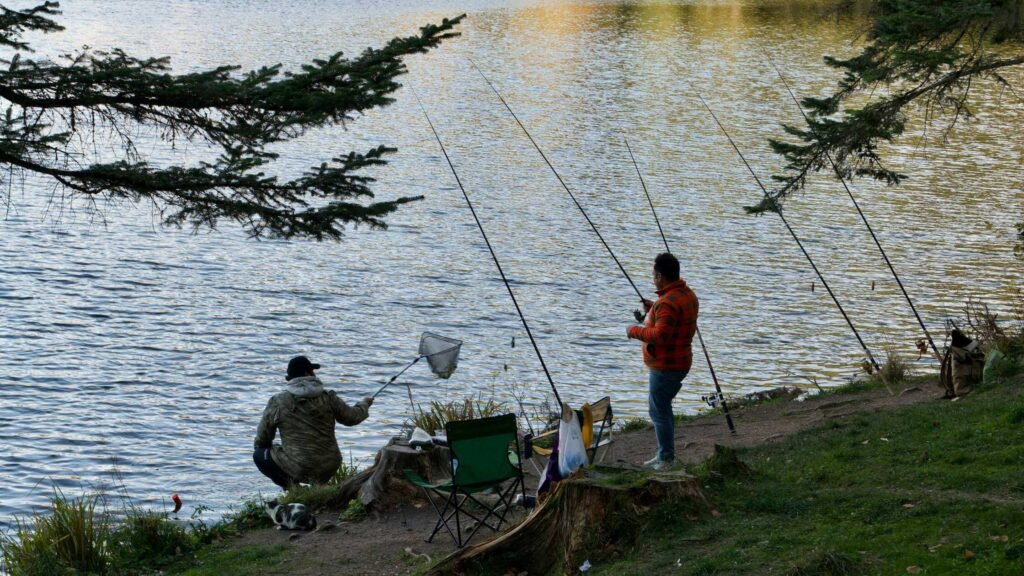
The fishing is serious here, in a way that separates the people who actually care about it from the people who want a photograph holding a fish. The Tirthan is known among a very specific community of anglers for its trout and mahseer, and if you arrive with even a passing interest, you will find yourself on the river at 5 a.m. with a local guide who will spend six hours not speaking to you, which is exactly what you need. The water is cold enough to shock your system awake. Your guide will show you the boulders where the fish hold, the way the current changes colour when it deepens, the exact moment when you should cast. There is a lodge called Trout House—deliberately positioned to catch exactly the kind of visitor who wants the experience without the pretence—where you can arrange this, and the owner, Vikram, has forgotten more about this river than most people will ever know. He will not tell you stories about it. He will let you experience it instead.
What Jibhi does to you—and I say this with the certainty of someone who has returned four times and is already planning the fifth visit—is teach you that a place does not need to be rare or difficult to reach or newly discovered to matter. It simply needs to be itself, consistently and without apology. You will leave with river stones in your pockets, the names of dogs you will never meet again, and a specific kind of longing that is not for the place itself but for the version of you that existed there—unhurried, awake, capable of sitting on a rock and watching water for an hour without checking your phone. That person is still in you. Jibhi just makes it easier to find. If this has sparked something in you, the team at Dream Destiny Trips has a tendency to turn these sparks into actual itineraries—reach out and watch what happens.


