The bus drops you at the edge of the peninsula just as the light begins its slow collapse into the sea, and for a moment—before the vendors notice you, before the temple bells pick up their evening tempo—you understand why people come here to say goodbye to things. The rocks are dark and unforgiving, worn smooth by centuries of monsoon and salt spray. The air tastes like it has travelled from Africa. Fishermen in mustard-yellow boats bob in the shallows, their nets cast wide like open hands. There's no gentleness to this place. The water doesn't caress the shore; it argues with it. And standing there, watching the Arabian Sea and the Indian Ocean refuse to fully merge despite pressing against the same rocks, you feel something shift in your chest—a recognition, perhaps, that some meetings are meant to be kept separate. The light turns the sky the colour of old copper, and a woman in a crimson sari walks past you without looking, carrying flowers to the temple. This is Kanyakumari at last light: honest, indifferent to your arrival, utterly itself.
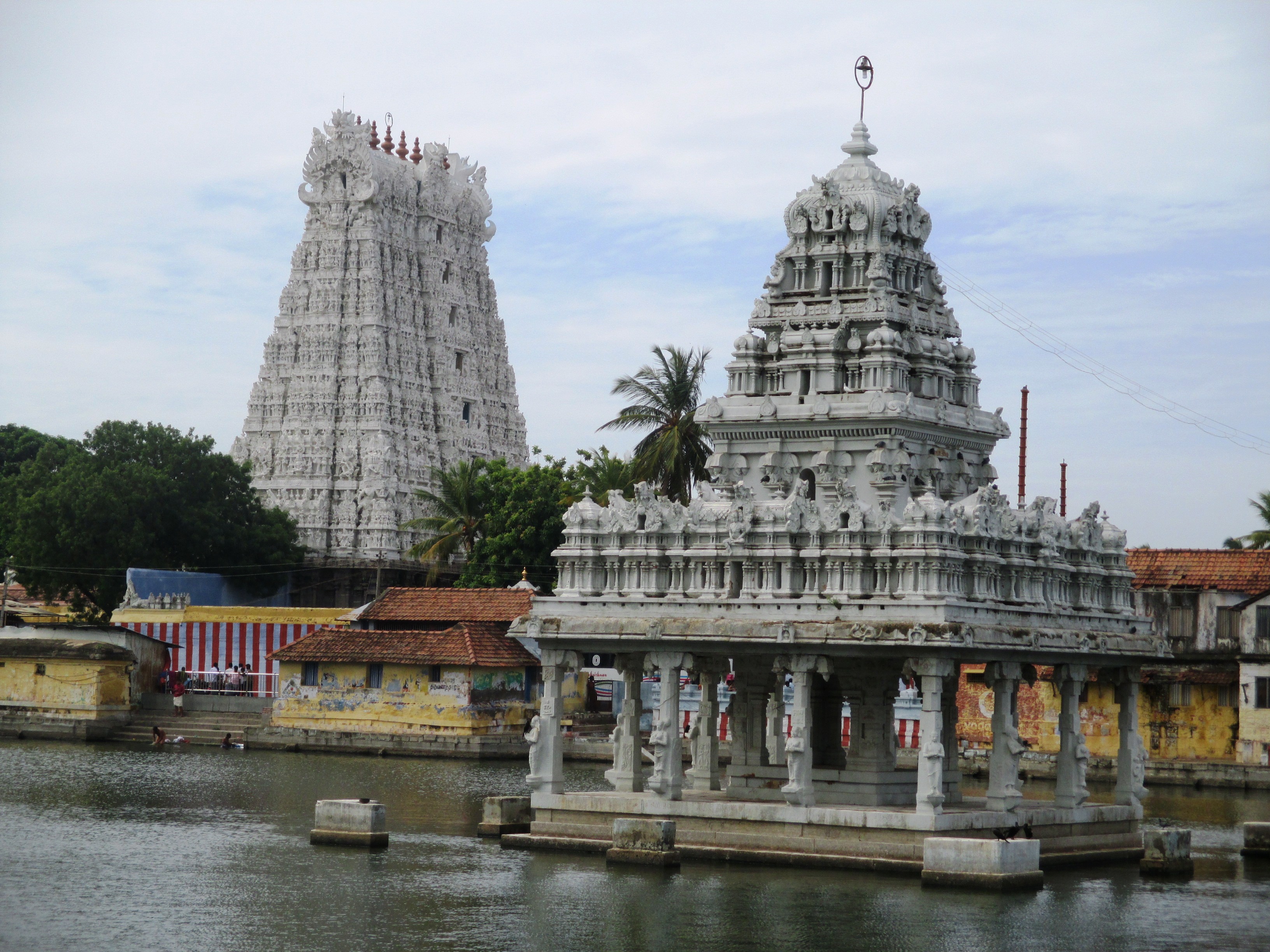
The Kumari Amman Temple sits at the literal southern tip of India like a small, defiant fist. But the real story isn't in the architecture—it's in a tale the priests tell, passed down through generations, about the goddess Parvati who performed penance here, waiting for Shiva. She never married. Instead, she chose devotion, chose herself. The local shopkeepers—the ones who've been running their stalls for thirty years and remember when tourists were a novelty—they tell you this with a certain kind of pride, as if the goddess set a tone for the place. When you actually sit in the inner sanctum, the air thick with incense and the sound of a thousand prayers pressing against the stone walls, you realize this temple isn't really about conquest or grand devotion. It's about waiting. About standing at the edge and deciding what matters. The priest marks your forehead with ash and says 'Pooja,' blessing the moment, and you understand that Kanyakumari has always been a place where people come to reckon with something—the end of something, the beginning of something, or simply the courage to stay still at the edge.
Breakfast at the small vendor stall near the rocks—the one that doesn't have a name, just a hand-painted sign that says 'Dosas'—is where you'll have your second real conversation with the place. The owner, Lakshmi, makes appam (the locals call it 'hoppers,' soft rice cakes with crispy edges) that are so good you'll eat four without meaning to, dunked in a coconut curry so rich it barely qualifies as food. She speaks Tamil, some Malayalam, a little English learned from forty years of listening to travellers apologize for their Hindi. When you stumble over the language—asking for 'chaye' instead of 'chai,' mixing up your words—she laughs, not unkindly, and brings you extra appam. The market just inland smells like turmeric and fish and crushed coriander after the early morning rain, and the vendors know everyone by face and order: the fishmonger who whispers prices, the flower seller who ties jasmine garlands while gossiping (they call it 'veettile sambhaashnam'—home-style talk), the young man selling fresh coconut water who's trying to save enough to open a guesthouse. By your third visit, you become part of this casual ecosystem. Lakshmi saves you the best dosa. The flower seller asks about your family. The fishmonger gives you extra without charging.

Here's what nobody tells you before you arrive: the WiFi at most guesthouses is held together by prayer and spite. The five-hour bus ride from Nagercoil is an education in Tamil patience and the surprising structural integrity of older vehicles. And yes, there are the inevitable pushy vendors outside the temple—the ones selling coconut water in plastic bags and offering 'best government rate' for gemstones you don't need. But here's what matters: go in October or November, when the light softens and the monsoon has tired itself out. Skip the crowded afternoons entirely and walk to the rocks at 5am instead. The town feels different when it belongs to fishermen and elderly walkers, not tour groups. Stay in the smaller guesthouses inland, away from the main promenade—ask for recommendations from locals, and they'll point you toward family-run places where the owners actually live upstairs and care whether your ceiling leaks. Decline the 'special boat tour' hawked at the temple entrance; the rocks themselves are more truthful than any guided experience. And for the love of everything, don't attempt the Vivekananda Rock ferry in rough seas just because you've read about it. The sea here has opinions, and not all of them are kind.
The real revelation comes on your second or third visit, when you venture inland to the smaller neighbourhoods where tourists are still a genuine novelty. The Padmanabhapuram Palace, just across the border in nearby Tamil Nadu, is where time genuinely feels suspended—not in a manufactured, heritage-site way, but because the wood carvings are so intricate, so obsessed with detail, that you can feel the wood-carver's patience bleeding into the grain. The palace kitchens still have the original stone grinding surfaces. The murals show scenes from daily life, not grand battles. And walking through the courtyards at dusk, when the light comes sideways through the wooden lattice screens, you see how people actually lived—not in grand gestures, but in the small negotiations between light and shadow, privacy and openness. There's a woman who tends the gardens, and if you're quiet and respectful, she'll show you the medicinal plants and explain their uses in Tamil—turmeric for inflammation, tulsi for fever, neem for the skin. She has no English, but gestures are a complete language.
The fishing village atmosphere—this is what stays with you after the postcard moments fade. Watch the boats return at dusk, the nets heavy with silver fish that catch the last light. The fishermen haul them up with a coordinated rhythm that comes from decades of partnership. One man shouts, three others pull. It's choreography born from necessity. They're not performing for anyone. You stand there, invisible in the way that travel allows, and see work that has remained unchanged for centuries. The boats themselves—wooden hulls patched with blue paint and prayers—look like they should sink, but they don't. The fishermen's skin is the colour of mahogany, their eyes clear and used to reading weather in the smallest cloud formations. They speak to each other in rapid-fire Tamil, and you catch maybe one word in ten, but you understand the tone: it's the ease of people who have worked together so long they barely need words anymore. Buy fish from them if you find a place to cook it. Or simply sit with them for a while, as they mend their nets and drink strong black tea from small glasses, and understand that Kanyakumari's true character lives here, in this work, not in any temple or monument.

When you leave—and you will, eventually, because even the places we love most can't hold us forever—you'll carry something specific back with you. Not photographs, though those matter. Not stories, though you'll tell plenty. But a particular kind of longing that feels earned rather than manufactured. The longing for a place that doesn't try to seduce you, that simply exists with complete indifference to whether you approve. You'll remember the taste of Lakshmi's appam. You'll remember the sound of the Arabian Sea meeting the Indian Ocean—not as some mystical merging, but as two separate things arguing in the most honest way two things can. You'll remember the fisherman's hands, the incense in the temple, the light that turns everything copper and gold. And the next time someone mentions wanting to see 'the end of India,' you'll tell them the truth: it's not the sunsets or the temples or the rocks. It's the quiet insistence of ordinary life, continuing, right at the edge of everything. If this has sparked something in you, the team at Dream Destiny Trips has a tendency to turn these sparks into actual itineraries—reach out, and watch what happens.