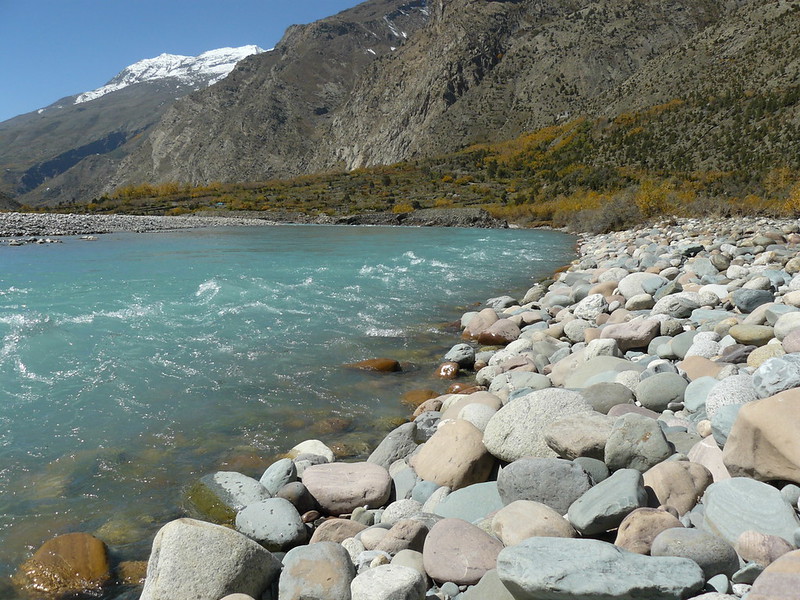
The car rounds a bend and suddenly there is nothing between you and the world except 134 kilometres of water the colour of a lie—too perfect, too blue, as if someone spilled lapis lazuli across the Himalayas and forgot to tidy up. You step down into air so thin it feels like drinking through a straw, and the cold—the actual, deliberate cold—finds every gap in your clothing like it's been waiting specifically for you. A Ladakhi woman in a goncha (the traditional maroon dress, thick as armour) sits on a rock selling momos from a plastic container, entirely unmoved by both the beauty and the temperature. This is Pangong Tso, and it will not perform for you. It simply exists, indifferent to your camera settings and your bucket list ambitions. You are here because you chose the hard way, and the lake is watching to see if you meant it.
Three years ago, I met an old man named Tenzin at a tea stall in Chushul, the nearest village to Pangong's eastern shore. He had never left this place—born here when India was still fighting for independence, he had watched the lake change colour with the seasons 8,000 times and never tired of it. Over butter tea so salty it tasted like the earth's memory, he told me about the 1962 war, how soldiers had walked these very rocks, how the border still ran through the middle of the lake like an invisible scar. His grandson had moved to Delhi. His daughter worked in Leh. But Tenzin remained, not because he couldn't leave, but because he understood something most of us miss: that a place doesn't become meaningful because it's famous. It becomes meaningful because you stay long enough to fight with it, lose to it, and then wake up and do it again. The Chinese side of the lake—still off-limits to Indian tourists in most seasons—gleamed across the water like a rumour. He didn't seem angry about it. Just sad in the way old mountains are sad.
Chushul has one main street, though calling it that is generous. There's a small government guesthouse, a couple of family-run restaurants, and a single shop where a man named Dorje sells instant noodles, tins of beans, and snuff tobacco with equal pride. The real meals happen in people's homes. I ate thukpa (hand-pulled noodle soup) at a widow's place after asking for directions—she waved away my offers to pay and instead asked me to sit while she kneaded dough by hand, her movements so precise they looked like meditation. The broth was made from yak bones and wild herbs that don't grow anywhere else. She told me—through Tenzin's translation—that tourists usually stay three hours and then leave. They don't understand that a place this quiet demands something from you: attention, silence, a willingness to be bored until boredom transforms into something else entirely. The chai she poured was so strong it could probably strip paint, and it was perfect.
Here's what nobody tells you: the best time to visit is September, not June. Yes, June is warmer (relatively—you'll still freeze), but by September the summer tourists have evaporated like morning frost, and the lake settles into a deeper blue, the kind of colour that makes you question whether you're actually seeing it or remembering it. The five-hour drive from Leh is rough—potholes designed by someone with a grudge, playing Bollywood songs at volumes that seem physically impossible, and your lungs slowly adjusting to the altitude. Bring motion sickness tablets and honest expectations. Don't go expecting comfort; go expecting transformation, which is a different thing entirely. Stay in Chushul rather than Leh if you can—the hotels closer to the lake charge more for less, yes, but they keep you honest. You can't hide here. There's nothing to do but exist, which terrifies most people and heals some.
The trek around the lake's Indian side is the real story, though. A local guide—ask for anyone recommended by your guesthouse, they'll know—will take you to spots where the water changes colour three times in a single afternoon: glacier-fed silver in the morning, turquoise when the sun hits it straight, and deep indigo as evening approaches. These aren't Instagram moments. These are quiet confirmations that reality can be as dramatic as any photograph, and that the best views are usually the ones you're too tired to photograph properly. On my last visit, our guide Pheldon stopped walking at one point and just sat on the rocks in silence for twenty minutes. When asked if something was wrong, he smiled and said he was 'letting the mountain remember him.' It sounds like poetry when I write it now, but in that moment it sounded like the most practical thing anyone had ever said.

Chushul's strangest charm is the prayer flags. They're everywhere—strung across doorways, tied to jeeps, fluttering on hillsides where no human path reaches. They're not for tourists. They're for the wind to carry prayers into the spaces between things. A Buddhist shopkeeper once explained that the flags aren't decorations; they're intention made visible. Standing at Pangong's edge at dawn, when the flags are still damp with night and the lake hasn't yet decided what colour it will be, you start to understand that you're not looking at a landscape. You're standing inside someone else's devotion. The border—still real, still tense despite the poetic light—reminds you why this place matters to people beyond Instagram. This isn't a neutral space. It's a contested prayer, a geography of longing, a lake that holds arguments between nations and still somehow feels peaceful.
Months after returning home, I'll be in traffic or in a meeting or buying vegetables, and suddenly I'll remember the cold—not as discomfort, but as clarity. How it stripped away the need to perform, to optimize, to turn an experience into content. Pangong Tso does that. It doesn't care if you document it. It doesn't care if you tell anyone about it. It simply demands that you show up completely, or not at all. That kind of indifference is increasingly rare. It's also increasingly necessary. If this has sparked something in you—that restless feeling that the usual routes won't satisfy—the team at Dream Destiny Trips has a tendency to turn these sparks into actual itineraries. Reach out. They'll help you find your way to a lake that doesn't perform, and a version of yourself you'd almost forgotten existed.