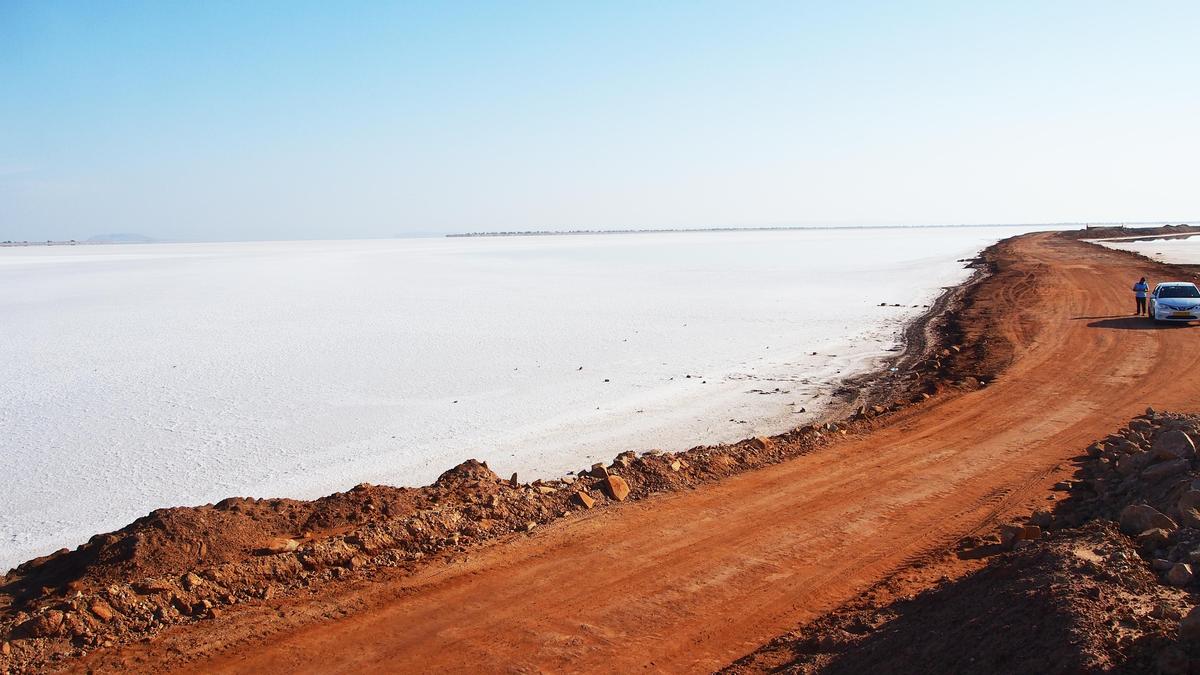
The bus wheezed to a stop at 5:47 am, which is either too early or exactly the right time depending on whether you'd slept. Through the dust-streaked window, there was nothing. No mountains, no trees, no human shape for thirty kilometres in any direction—just a flat expanse of white so pure it hurt to look at without squinting. This is the Great Rann of Kutch. The ground beneath your feet, when you finally step off that decrepit vehicle with the conductor who'd spent the entire journey complaining about his daughter-in-law's cooking, is hard-packed salt that crunches like snow in winter. Except there is no winter here, not really. At dawn, the temperature is still warm enough that you'll strip off your jacket within ten minutes. The light arrives not as a gradual softening but as a sudden white flood, as if someone has switched on a stadium lamp in the sky. You stand there, dust from the journey still settling on your shoulders, and understand why people call this place empty. They're wrong, of course. It's full—just not of anything you expected.
Three centuries ago, this wasn't a tourist destination or a photographer's mecca. It was simply home. Roha, a Harijan settlement tucked at the edge of the Rann, still feels that way—a clutch of mud-brick houses with deep blue doors and windows painted in patterns that mean something to the families who live there, though nobody quite agrees on what anymore. A woman named Savitri, whose family has lived there for six generations, once told me the salt flats were 'the earth's memory.' She meant it literally. The Rann floods with seawater each monsoon, leaves behind salt, and then cracks into a thousand patterns that tell you where it's been. Savitri's grandmother used to read those cracks like others read horoscopes. The settlement has no electricity—not because they don't have it, but because they've chosen to keep the mornings to themselves. They wake with the birds, make chai over wood fires, argue about the price of salt, and sell handicrafts to visitors with the weary politeness of people who know the world is changing but aren't sure they want to join it. When you sit in Savitri's courtyard and she brings out that chai, the taste of cardamom and jaggery mingling with woodsmoke, you're not just drinking tea. You're tasting three hundred years of salt, stubbornness, and belonging.
Food in the Rann is honest work. There's a small warung—a street stall is too grand a word—run by a man named Ketan near the entrance to the white desert. He makes a bhakri, which is millet flatbread, topped with a raw onion and chilli paste that will make your eyes water if you're not ready for it. Ketan has been there for eight years. Before that, he was in Ahmedabad working in a factory. Something about the Rann called him back. He won't say what. What he will say, while flipping bhakri on a cast-iron griddle, is that the salt changes the taste of everything—it's in the air, the water, even the flour somehow. The dal he serves is fiery with mustard seeds and asafoetida; the chutney is made from kokum, a souring fruit that grows in Western India, and it's the kind of simple that only reveals itself as perfect after you've eaten it. Sit with the truck drivers who come through at lunch, listen to their gossip and bickering, and you'll understand something about this region that no guidebook will tell you: the Rann connects people precisely because it isolates them. When your only neighbours are thirty kilometres away, you learn to value a good conversation.
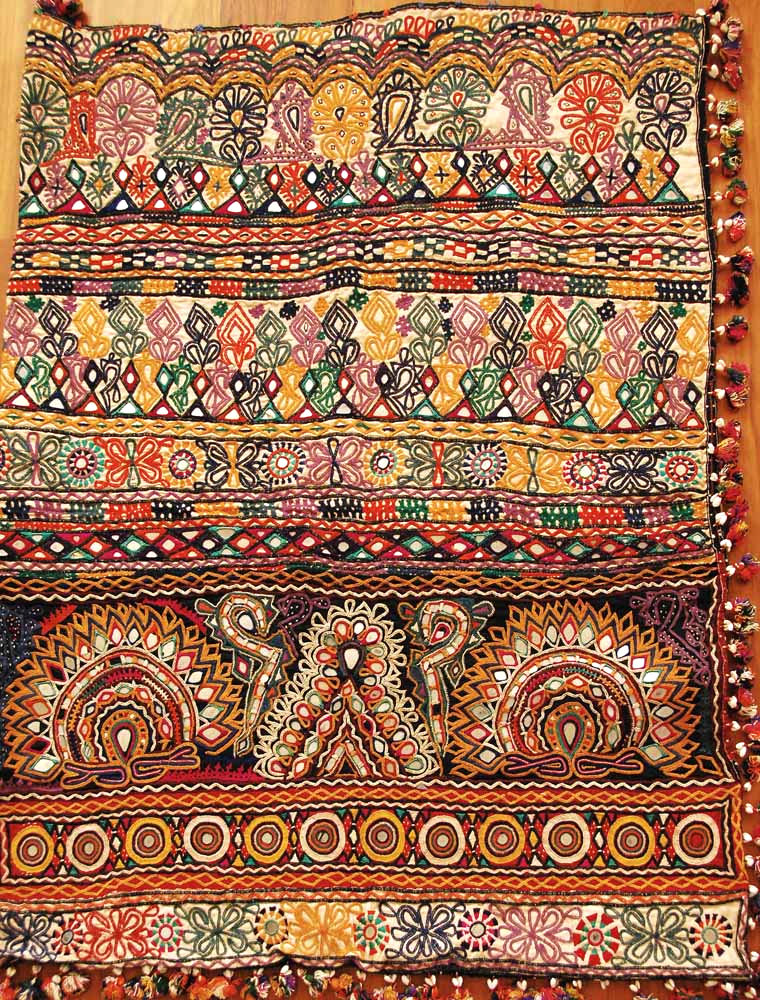
Here's what the tours don't mention: the guesthouse WiFi will fail you at the crucial moment when you're trying to upload that perfect photograph. The five-hour drive to get here is genuinely brutal—potholes that feel personal. And yes, there are pushy vendors at the main tourist areas, though they're usually selling the same embroidered textiles you've seen in Ahmedabad for a fraction of the price. But here's the actual wisdom: go in November or December, when the temperatures dip to a merely warm 28 degrees and the salt is still white as fresh snow. Skip the organized tours at the village. Instead, hire a local driver—ask at your guesthouse—and spend an afternoon simply driving across the salt flats with no destination. Let him take you to places tourists don't photograph. Stop when something catches your eye. Politely decline the 'camel safari' unless you genuinely want to ride a cranky camel; the walking is better anyway, and your legs will thank you more than your Instagram account. Most importantly: go during the monsoon season if you can manage it. Between June and August, the Rann becomes a shallow sea, and the sunsets paint the water in shades of pink and purple that seem physically impossible. Yes, the roads are more treacherous. Yes, it's humid. Yes, you might get stranded. But you'll see something fewer than five hundred tourists a year witness, and you'll understand why people like Savitri never leave.
The wildlife here surprises you. You'll see nilgai—blue bulls, though they're actually more grey than blue—standing in the distance like sculptures someone forgot to finish. Flamingos arrive in their tens of thousands in winter, turning the salt ponds into something from a fever dream. There's a sanctuary called the Nata Sanctuary about ninety minutes from the main tourist area, where the birdwatching is genuinely transcendent. Bring binoculars, bring patience, bring someone who won't mind standing silently for three hours while you wait for a spoonbill to turn its head exactly the way you want it to. The point is: the Rann isn't blank, no matter how blank it looks. Every seemingly empty space is occupied. Every stretch of white has a story. You just have to stop moving long enough to listen.
On my last visit, I spent a full day with Ketan, helping him prep food, listening to him describe the physics of salt crystallization with the precision of someone who'd read every book about it. We didn't talk much. There was a lot of tea. At 6 pm, we climbed onto the roof of his small structure—not quite a building, not quite a tent—and watched the sun set. The sky went orange, then coral, then a shade of pink that doesn't have a name in English but in Gujarati is probably something like 'the colour of hope seen from very far away.' When you watch a sunset over thirty kilometres of nothing, when there's genuinely no horizon because the sky and earth have merged into a single continuous space, you feel something shift. It's not transcendence. It's not spirituality—or maybe it is, but in a way that feels secular and true at the same time. It's the recognition that you're very small, and that this place was doing just fine before you arrived, and will do just fine after you leave. And somehow, that's not depressing. It's liberating.
When you're back in your city—clogged with traffic, thick with other people's noise, made small by buildings—you'll remember the Rann as a feeling more than a place. You'll remember Savitri's blue door. Ketan's cardamom chai. The specific texture of salt crunching under your feet at dawn. And you'll feel a small, persistent ache that's hard to describe to anyone who hasn't been. It's not a desire to go back, exactly, though you will. It's more like the Rann has claimed a small corner of your chest for itself, and you've accepted that you'll probably be thinking about that white horizon for the rest of your life. If this has sparked something in you, the team at Dream Destiny Trips has a tendency to turn these sparks into actual itineraries—reach out and watch what happens.