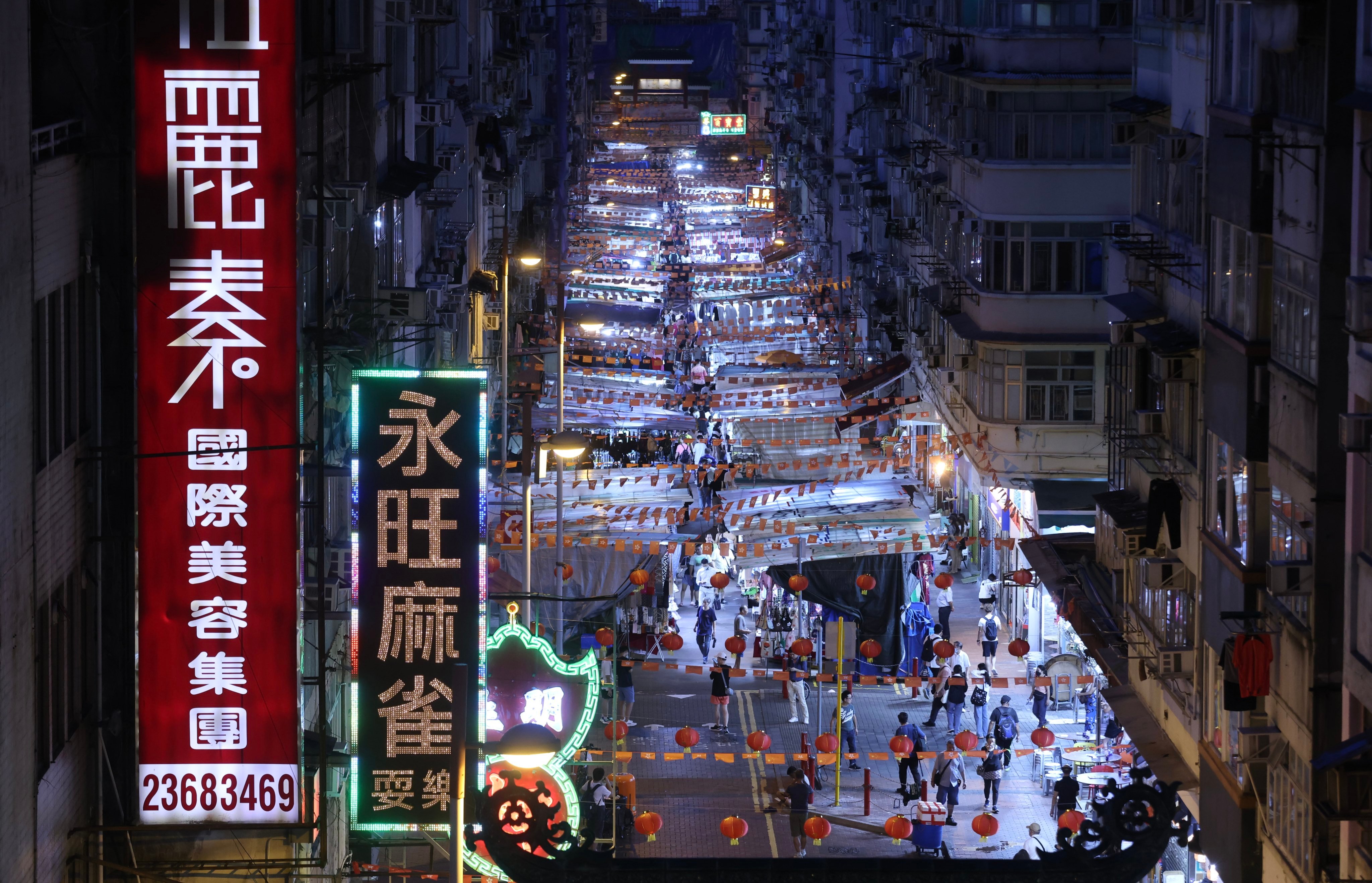
The MTR doors hiss open at Central Station and the crowd moves like water — no jostling, no apologies, just the understood choreography of 7.5 million people who have perfected the art of existing in impossible proximity to each other. You emerge into the 6am half-light where office towers fade into fog, and the first thing that hits you is the smell: diesel, egg tarts from a dai pai dong stall, the ghost of last night's rain on concrete. A woman in heels navigates the escalator with her phone in one hand and a coffee in the other, not looking up once. An elderly man in a vest arranges tiny potted plants on a windowsill six storeys up, each one precisely angled toward the sun. Hong Kong doesn't perform for you. It simply refuses to stop moving, eating, building, arguing, loving, and surviving — and if you're smart, you stop trying to understand it and just surrender to the rhythm.
The Star Ferry — that green and white wooden boat that has been ferrying people between Hong Kong Island and Kowloon since 1888 — taught me more about this place than any museum ever could. One afternoon, sitting on the upper deck with an old Cantonese woman who was returning home after a doctor's visit, she pointed at the skyline and told me something I've never forgotten. 'When I was young, this was all water. Now it is all sky.' She wasn't being poetic. She was describing the precise mathematics of Hong Kong's survival: a place so desperately short of space that it has learned to build upward with the intensity of a plant reaching for light. But here's what the guidebooks miss — in the shadow of those gleaming towers, the old neighbourhoods still hum with their own defiant life. The wet markets still smell like fish guts and bitter melon. The dai pai dong still serve congee at 5am to people who've been awake all night. The ferries still creak and sway, still carry the same stories they carried fifty years ago, just with newer phones in passengers' hands.
On my third visit, I stopped trying to find the 'best' dim sum and instead followed a man in a Carhartt jacket into a narrow storefront on Spring Street in Soho where eight tables were crammed against each other with the confidence of family. The har gow — shrimp dumplings with skin so delicate you could read through them — arrived warm, and the woman serving us, who may have been the owner but gave off the vibe of someone who simply belonged there, called out to the kitchen in rapid-fire Cantonese: 'Yat go, yat go!' One more, one more. The egg custard tarts came next, and the elderly couple beside us broke theirs open to check for the perfect wobble of the filling — this is serious business here, the way some people debate philosophy. What struck me wasn't the food itself, though it was extraordinary, but the absolute lack of performance around it. Nobody was plating for Instagram. Nobody smiled at the camera. There was only the honest transaction between hungry people and someone who knew exactly how to feed them. This is Hong Kong's love language: efficiency wrapped around obsessive care.
Here is what I wish someone had told me before my first trip: October to November is the real sweet spot, not because the weather is perfect (it's warm and slightly humid, which in Hong Kong is considered 'dry'), but because the festivals have settled and the chaos has developed a kind of rhythm. Also, skip the floating village restaurants in Aberdeen that cater to cruise ship tourists — the food is mediocre and the performance is exhausting. Instead, take the ferry to Cheung Chau Island on a weekday morning, eat at a storefront seafood place where the owner buys the catch that morning, and watch the real life of Hong Kong unfold without an audience. Finally, people will pressure you to do the Peak Tram and the shopping on Nathan Road. Both are fine. But the real Hong Kong lives in the mid-levels apartment buildings where teenagers do their homework in living rooms the size of cupboards, where domestic workers from the Philippines gather in parks on Sundays, where old men play Chinese chess in the shade and argue with the intensity of people protecting territory that matters. Don't Instagram your way through this city. Get lost instead. Get tired. Eat something you can't name. Argue with a bus conductor about the fare (they love this). Let it change you.

The thing about Hong Kong that nobody prepares you for is the vertical intimacy of it all. In a single block, you might encounter a temple where incense curls around Buddha statues, a nail salon where six women work in focused silence, a clothing shop no wider than a hallway, a noodle bar with five stools, and a luxury watch boutique, all stacked on top of each other like a love letter written in architecture. Walk through the old streets of Mong Kok or Sham Shui Po and you understand that Hong Kong's beauty isn't in grand gestures — it's in the specific, the worn, the fiercely defended small thing. The neon signs overhead (called 'tsin hao pao,' the old-fashioned ones that actually glow instead of LED) flicker to life at dusk and turn the wet streets into something that looks like a dream someone half-remembered. I spent an entire evening just walking under those signs, stopping for nothing in particular, just moving through the light like it was water.
What keeps bringing me back, though, is something harder to articulate. It's the specific longing you feel when you're sitting in a café in Sheung Wan at 3pm, nursing a yuanyang (coffee and milk tea mixed together — 'yin yang' in Cantonese, because it represents perfect balance, or so the legend goes), watching the light change on the harbour, knowing that in a few hours you have to be somewhere else, somewhere normal, somewhere that moves at a human pace. Hong Kong doesn't ask you to like it. It doesn't perform comfort. It simply exists in its own terms — exhausting and exhilarating and utterly indifferent to your plans. You come for the skyline or the food or the energy, but you stay because you've realized something: this city isn't a destination. It's a test. And if you pass it, if you learn to move with it instead of against it, to embrace the contradiction of ancient temples beneath glass towers, to eat standing up without shame, to take the stairs when the escalators break, to say 'm'goi' (thank you) to people who barely hear you say it — then you've touched something real. That's what Hong Kong gives you. Not answers. Just the absolute certainty that you are alive.
If this has sparked something in you — that specific ache of wanting to understand a place that refuses to be understood, a city that rewards wandering and punishes passivity — the team at Dream Destiny Trips has a tendency to turn these sparks into actual itineraries that respect both the Hong Kong you read about and the Hong Kong that lives in the spaces between the postcards. Reach out and watch what happens.