The rental car smells of coffee and synthetic newness, and you've been driving for sixteen minutes when you understand why nobody quite prepares you for Iceland. The landscape doesn't gradually reveal itself—it ambushes you. One moment you're rolling past ordinary green sheep pastures outside Reykjavik, the next you've rounded a bend and there's a waterfall the size of a shopping mall falling straight down a basalt cliff face, mist rising like the earth is slowly exhaling. Skógafoss, the guide book calls it. But the Icelandic name—Skógafoss, forest waterfall—means something closer to 'the forest remembers water', and standing there with rain on your face and your phone's battery draining from pointless photo attempts, you realise the locals aren't being poetic. They're being literal. The landscape here doesn't perform for tourists. It simply exists with such geological confidence that you feel like the small, temporary thing you are.
The Ring Road is 1,332 kilometres of asphalt that circles the entire country, and every section tells you something about Icelandic stubbornness. Take the South Coast story I learned from Jón, a weathered glacier guide whose family has lived near Vatnajökull for five generations. In 1996, the Grímsvötn volcano beneath the ice sheet erupted, and the glacier above it started melting so violently that a glacial burst—what locals call a jökulhlaup, pronounced roughly like 'yuckle-hlow-up'—roared across the plains and destroyed the ring road entirely. Bridges were ripped away. The landscape was redrawn in a matter of hours. 'We rebuilt it in the same place,' Jón told me over a thermos of coffee at the base of Vatnajökull, 'because the country decides where we can go, not the other way around.' That acceptance—that willingness to rebuild on terms the land sets—is woven into every stretch of asphalt. The road isn't conquering Iceland. It's negotiating with it, turn by turn.

Food on the Ring Road teaches you humility and also gives you a proper appetite. There's the Icelandic hot dog at Bæjarins Beztu in Reykjavik—lamb sausage topped with crispy onions and a mysterious sauce that tastes like childhood nostalgia even if childhood wasn't yours—which you'll eat standing up, probably in light rain, and think about for three days after leaving the country. But the real food story happens in small towns whose names you can't pronounce. In Höfn, a fishing village on the southeast coast, I stumbled into a restaurant called Höfn & Co almost by accident (GPS was uncertain, the sign was small, it was 7:47pm on a Tuesday), and they served me langoustine—freshly caught that morning—with brown butter and salt, nothing else, and the butter melted into the pink flesh and I understood for the first time why some people move to the edges of the world. A woman at the next table, clearly local, caught my eye and nodded approvingly. 'Góða nótt,' she said as she left—good night—and in those two words was a kind of acceptance, like I'd finally stopped being a tourist and become briefly, temporarily, part of the small conspiracy of people who understand that the best meals happen by accident.
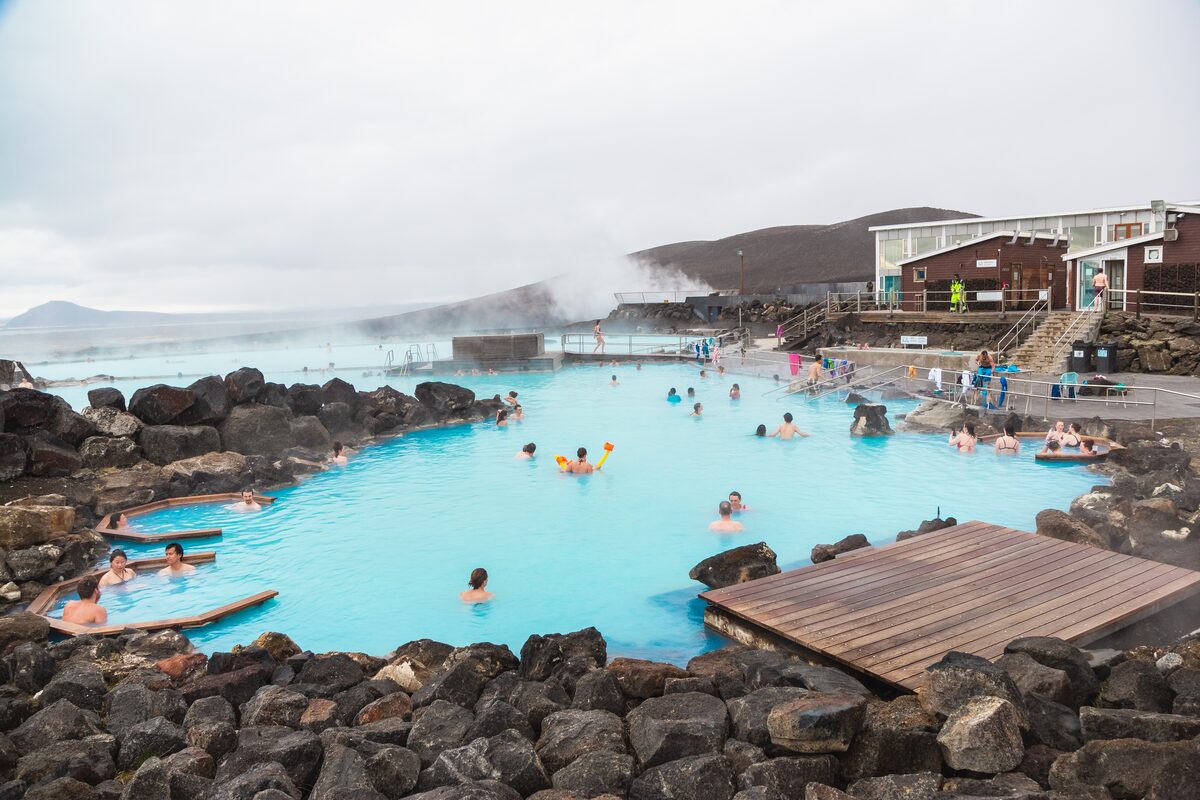
Here's what the travel blogs don't tell you: the Ring Road is magnificently lonely, and that loneliness is partly wonderful and partly a bit much. Between Höfn and Jökulsárlón glacier lagoon, you might drive for forty minutes and see three cars and one sheep. The light in these stretches—pale, eternal, shifting from amber to grey to something that isn't quite blue—can make you feel either transcendent or subtly unravelled, depending on your mood and your sleep schedule. Go in summer if you want the extended daylight and the manageable weather; go in winter only if you genuinely enjoy the idea of driving eight hours in darkness with a chance of mild peril. The Ring Road is technically driveable year-round, but winter requires serious respect and a willingness to turn back—rental car companies aren't sentimental about insurance claims. The Icelandic people themselves are generous with directions but refreshingly unimpressed by your enthusiasm. Mention that you're finding the landscape amazing and they'll smile and say something like 'Já, already very cold though.' It's not coldness (well, it's also coldness), it's a refusal to oversell their home. Decline the hot spring tours unless you genuinely want to sit in volcanic-heated water with forty Japanese tourists. The thermal pools exist almost everywhere—locals visit the small ones, tourists photograph the big ones.
The glaciers demand their own paragraph because driving toward one for the first time does something neurological to your brain. Vatnajökull, Europe's largest glacier, appears not gradually but suddenly—a white wall of ice so vast that your sense of scale collapses. You've seen the photographs. Nothing prepares you for the actual visibility: the way the glacier seems to swallow light, the way the ice looks less like frozen water and more like something from another planet, blue-white and hostile and millions of years old in a way that makes your thirty-some years feel like a single afternoon. You can hike on the glacier with a guide (and should, though bring actual waterproof gloves or your fingers will inform you of this mistake), or you can walk to Jökulsárlón, the glacier lagoon, where icebergs the size of houses float in water so blue it seems computer-generated, washing up on black sand beaches like the earth's most beautiful debris. A chunk of glacier will touch your hand—cold beyond cold, dense as stone—and you'll understand why the Vikings who found this place thought they'd discovered the edge of the world.
The North Coast, where the Ring Road turns toward Akureyri, has a different personality entirely. Mývatn, a volcanic lake, smells faintly of sulphur and looks ordinary until you walk its shores and realise you're standing in what might be Mars if Mars had Icelandic weather. The Krafla volcanic area nearby has steam vents that hiss like the country is still arguing with itself about whether to be habitable. In Akureyri—technically Iceland's second-largest town though it feels like a small Norwegian village—I sat in a café where the owner, Sigrun, served coffee and cinnamon cake and told me unprompted that the tourists who stay two days never understand the country, the ones who stay two weeks start to, and the ones who stay two months give up and move somewhere sensible. 'The landscape here makes you honest,' she said. 'It doesn't allow pretending.' That felt true. After two weeks of Ring Road driving, I'd stopped performing enthusiasm at photo stops and started simply sitting in the car, watching light move across mountains, thinking about nothing in particular.

You leave Iceland with a specific kind of longing—not the 'I wish I could go back immediately' ache, but something more complicated. It's the feeling of having been genuinely humbled by geology, of having understood, temporarily, how small you are and how much time the earth has. The Ring Road becomes a meditation on this, the repetition of driving and stopping and driving again a kind of prayer to something older than gods. You'll miss the light—that peculiar Icelandic luminescence that makes 10pm look like 7pm, that turns ordinary grass silver, that reminds you every moment that you're farther north than you've ever been. You'll miss the smallness of towns where everyone knows everyone, the generosity of strangers who'll help you unstick your rental car from gravel, the hot springs that smell of minerals and feel like absolution. And months later, in a city that feels too loud and too crowded and too interested in performing for itself, you'll think about Sigrun's words—about how the landscape makes you honest—and wish you could stand in that Icelandic wind again, being made small by something beautiful and absolutely indifferent to whether you appreciate it. If this has sparked something in you, the team at Dream Destiny Trips has a tendency to turn these sparks into actual Ring Road itineraries that move slowly enough to let the country speak. Reach out and watch what happens.