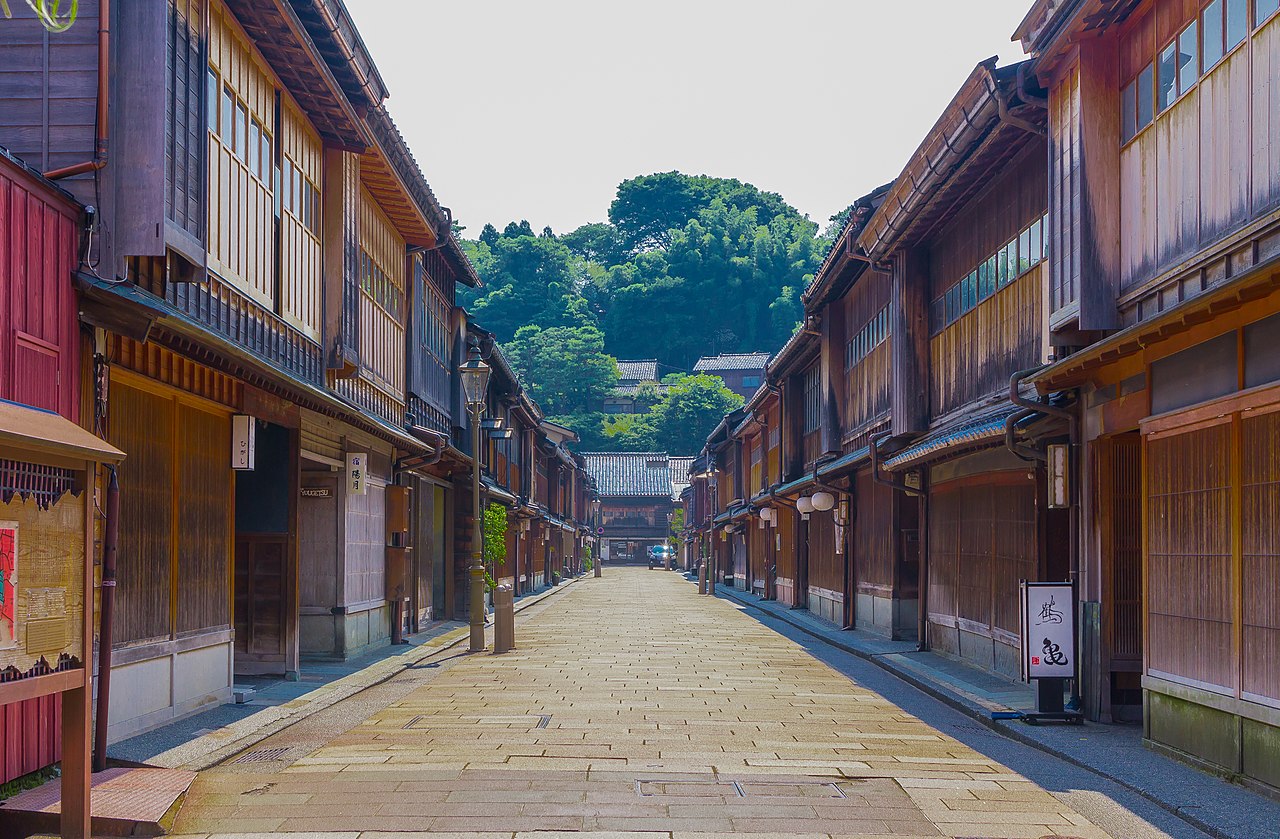
The convenience store clerk at 5:47 AM hands you a warm can of coffee without being asked, because you've come in every morning for five days and she's noticed you arrive exhausted and alone. The fluorescent lights hum above shelves that somehow contain exactly what you didn't know you needed—a perfectly round rice ball filled with umeboshi plum, a tiny bottle of yuzu juice, a magazine with no words you understand but photographs that make you smile. Outside, Kyoto is still asleep. The street lamps cast that particular shade of orange that only exists in Japan, the kind that makes even the concrete look like it's been painted with longing. You stand there with your warm canned coffee, wearing the same hoodie you wore yesterday, having walked the same route past the same closed izakayas and dark tea houses, and something in your chest clicks. This is where you want to be.
There's a small wooden temple near the Philosopher's Path where a monk named Takeshi tends a garden that looks like it was designed by someone who understood that beauty and grief are the same emotion wearing different clothes. He's been there for thirty-seven years. When you ask him why he doesn't travel, he says: 'Travel is for people who haven't found their place yet.' You want to argue—you've been all over the world, you're a seasoned traveler—but then he shows you how the moss between the stones changes colour depending on the angle of morning light, how the arrangement of three rocks and a carefully pruned maple tree tells a story about impermanence that no guidebook could capture. It's called mono no aware—the pathos of things—and it's the reason Japan gets under your skin. Not because it's exotic, but because it takes something universal (loss, beauty, time) and says: yes, this sadness is the point. This brief, perfect moment is exactly what you should pay attention to.
Food in Japan is a conversation with restraint. There's a soba shop on a narrow Osaka street run by a woman in her seventies who serves exactly ten noodle bowls a day—that's it, then she closes. The broth has been simmering in the same pot for fifteen years. You wait forty-five minutes for a bowl that costs the equivalent of three dollars and tastes like someone has distilled every winter morning into a single cup. She doesn't smile much, doesn't make small talk, doesn't care if you're a tourist. When you slurp loudly (this is correct, by the way—the Japanese do this, and it's called zuzutto, the sound of genuine appreciation), she nods slightly. That's your only feedback. At an Edomae sushi counter in Tokyo, the sushi chef spends five minutes explaining a single piece of tuna—where the fish came from, what it was fed, how the meat changes colour and flavour depending on the cut. He's not selling you the tuna; he's introducing you to it. These are not meals. They're rituals that teach you to pay attention.
Here's what tourists do wrong: they rush. They see a checklist—Fushimi Inari, Arashiyama Bamboo Grove, the Scramble Crossing—and check them off like they're achievements in a video game. The Instagram photo matters more than the actual experience. What you learn after your third or fourth visit is that Japan rewards patience with a kind of gift that doesn't appear in photographs. You have to sit in the same coffee shop three times before the owner remembers your order. You have to get lost in the same train system twice before you stop feeling panicked. You have to visit a temple on a rainy Tuesday morning when there's nobody else there, just you and a monk sweeping leaves that have already been swept. That's when it hits you—the silence, the space, the way Japan has been practicing stillness for centuries. Go in October or April for weather, yes, but honestly? The season matters less than the pace. Stay longer than you think you need to. Skip entire regions if it means spending three full days in one neighbourhood. The best parts of Japan only appear to people who have stopped trying to see everything.

There's a certain kind of loneliness that Japan specializes in—not the painful kind, but the kind that feels like clarity. You'll feel it on a Shinkansen bullet train at midnight, watching the darkness between cities, feeling the precision and care with which everything around you has been engineered. You'll feel it in a onsen (hot spring bath) with a stranger who makes no eye contact and no conversation, both of you suspended in steam and silence. You'll feel it standing in a Shogun's garden, watching a single leaf fall into a pond with a sound so small it's almost metaphorical. This is the thing that doesn't get mentioned in travel blogs: Japan is lonely, and lonely is sometimes exactly what you need. It's a loneliness without despair. It's the feeling of being held by something much older and more thoughtful than yourself.
The trains run so precisely that the average delay is under two minutes per year. The trains are also mostly empty between 10 AM and 4 PM. The streets are clean not because of enforcement but because people carry their own trash home in small bags. The public toilets are spotless and often heated. Nobody yells at you. Nobody hassles you to buy things. There's a design philosophy called wabi-sabi—finding beauty in imperfection, in wear, in the spaces between things—and once you understand it, you realize it's not just about aesthetics, it's about how to live. The smallest tea cup is treated with the same respect as a grand gesture. A cracked bowl is more valuable than a perfect one. This is radical. In a world that screams at you constantly, Japan whispers. And after a while, you stop straining to hear—you actually listen.
You leave Japan already planning to return. Not because it's perfect (the coffee culture has a weird hierarchy thing, the crowds during peak season are genuinely awful, and good luck finding a comfortable bed), but because it's changed something in how you see time. You find yourself moving slower in your actual life. You notice light differently. You brew your tea with intention. When someone asks you what Japan is like, you can't quite explain it because it's not a place anymore—it's a way of seeing, a permission to stop chasing and start paying attention. Months later, you'll be sitting in a café at home and suddenly remember the exact smell of that convenience store at dawn, the sound of the monk's broom, the taste of that soba broth, and you'll feel that small ache that means you've been genuinely changed by a place. That's when you know: Japan didn't give you memories. It gave you longing, which is far more valuable. If this has sparked something in you, the team at Dream Destiny Trips has a tendency to turn these sparks into actual itineraries—reach out and watch what happens.