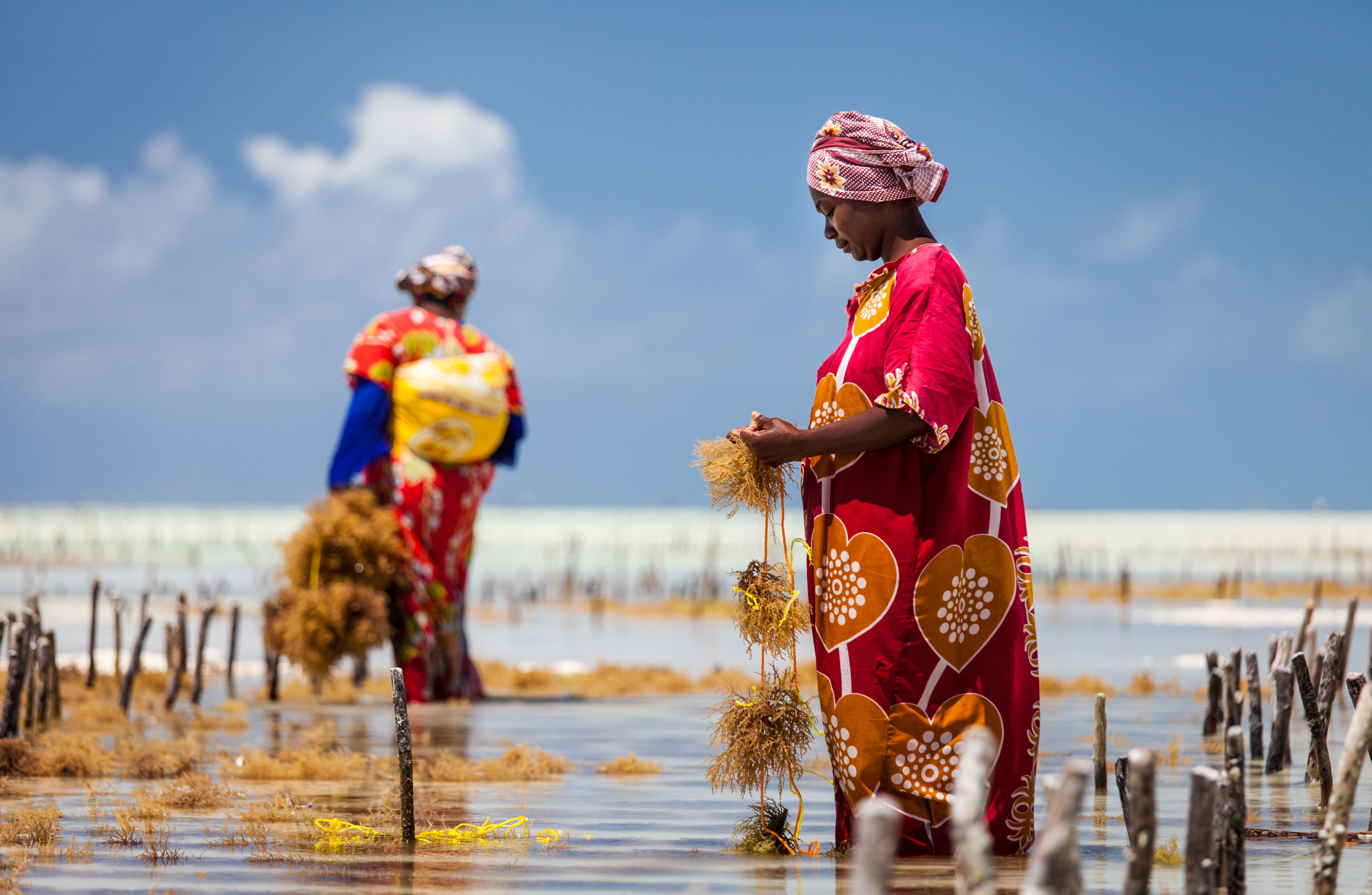
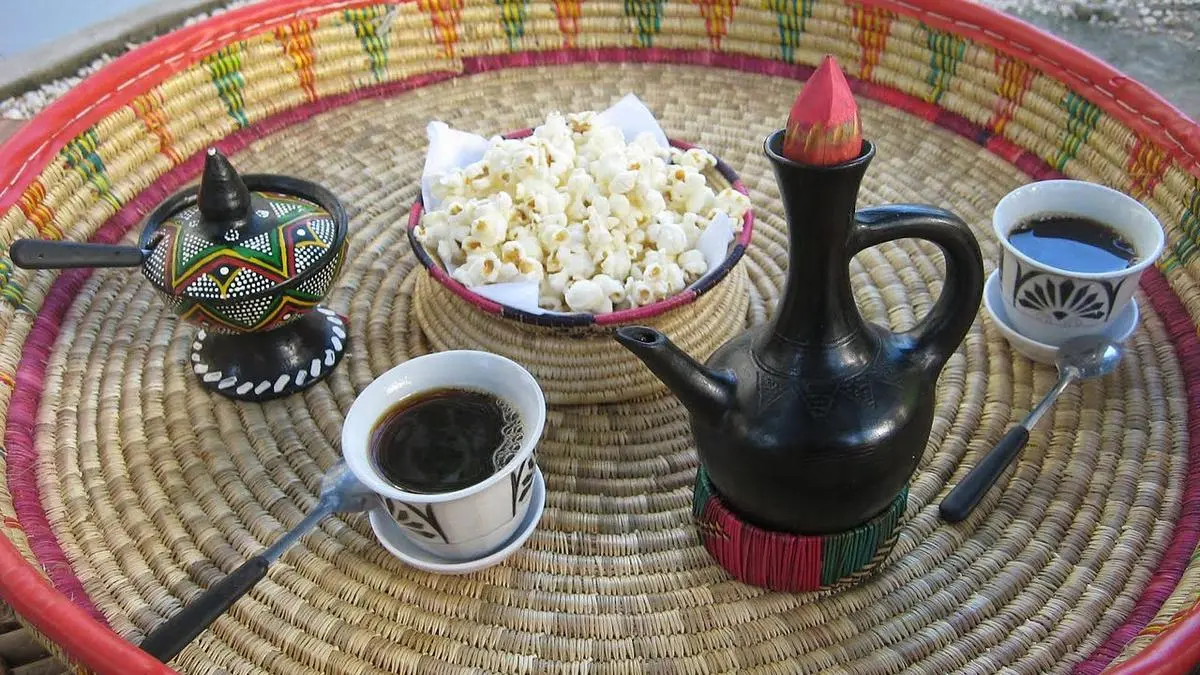
The air hits you before anything else. Not metaphorically—actually hits you, thick with clove and cinnamon and something older that has no name in English. You emerge from the ferry into Stone Town's maze of coral-stone corridors so narrow that two people brushing shoulders is a full conversation, and for a moment you understand why traders from Arabia, Persia, Portugal, and Oman fought over this island for five hundred years. The light does something strange here at dawn—it doesn't arrive gradually but announces itself in shades of pink so specific they should have their own Pantone number, catching on the elaborate brass door knockers (some shaped like hands, some like flowers, each one a family's signature) and making the whole town look like it's been dusted with gold leaf that's just beginning to tarnish. By seven in the morning, the muezzin's call rises from the mosque, and the streets that were yours alone suddenly belong to everyone again—schoolchildren in blue uniforms, vendors arranging pyramids of mangoes, old men in kanzus (traditional white robes) moving through the lanes like they own them, which, in a way, they always have.
What most people don't know is that Zanzibar's real story isn't about spice—it's about the people who fought over spice, and the island's refusal to belong entirely to any of them. There's a man named Rashid who runs a spice farm about forty minutes outside Stone Town, and if you ask him properly (with genuine curiosity, not the patronising smile tourists usually manage), he'll take you past the tourists who've paid for the 'authentic spice tour' and show you something that actually matters. He'll walk you through groves where clove trees stand so thick you can barely see sky, and he'll tell you about his grandfather, who was born into slavery on this very land in 1872—four years before slavery was officially abolished in Zanzibar. His family fought, Rashid will say quietly, to own what they once couldn't own themselves. Now his children work in tourism, in government, in hospitals. The island has a way of teaching you that freedom isn't a moment; it's a series of very small decisions made across generations. He'll offer you nutmeg so fresh it stings your sinuses clean, and when you understand that this isn't romance—it's resistance—the whole island reframes itself in your mind.

You haven't actually eaten until you've had urojo on the waterfront at six in the morning, standing among fishermen and dock workers while some uncle whose name you'll never catch assembles this magnificent mess of tamarind paste, hot sauce, chickpeas, potatoes, and bread into a paper cone and hands it to you with one of those looks that says 'trust me.' The flavour is impossible—sour and spicy and somehow comforting, the way food is supposed to work in places where eating is still social rather than transactional. On Forodhani Street, where the food stalls cluster each evening, you'll find an older woman named Fatima (there are always Fatimas, and they are always crucial) who makes coconut pilau that tastes like it contains the memory of every monsoon wind that's ever reached these shores. Sit at one of the plastic tables, order her version of pilau and a plate of grilled octopus, and watch tourists walk past confused because the signage is minimal and the place looks exactly like it could give you food poisoning. It won't. What it will do is ruin you for restaurant pilau for the rest of your life. The locals eat here. That's all you need to know.
Here's what nobody tells you: mid-afternoon is when you abandon your plans entirely. The sun reaches a point where it's not just hot but personally aggressive, and the whole island seems to have collectively decided that this is nap time. Shops close. Streets empty. This is when you sit in a café somewhere (Archipelago Coffee or Monsoon Café, if you want wifi and actual seats, or just someone's front room if you've made local friends), drink ginger-cardamom chai, and understand that tourism here hasn't completely destroyed rhythm the way it has in Bali or Phuket. People still live in Zanzibar, which is rarer than it sounds. Also: don't expect reliable electricity in smaller guesthouses, the roads outside Stone Town are genuinely rough, and if someone tells you about a 'secret beach' that requires a two-hour boat journey, ask yourself whether you actually want to spend four hours on the water with a stranger. The best beaches aren't secret—they're just the ones where other tourists haven't optimised the experience yet. Paje and Jambiani on the east coast are where locals actually swim, and the water there is warm enough to unmake your sense of where your skin ends and the ocean begins.

The spice islands earned their name for a reason, and seeing where clove, nutmeg, cinnamon, and cardamom actually grow—rather than in those disappointing jars from supermarkets back home—is worth the ferry ride and the slightly chaotic minibus journey. But here's what changes you: visiting the islands of Pemba and Unguja (Zanzibar's proper name, though everyone calls it Zanzibar anyway), you start to notice the Islamic architecture with new eyes. The mosques with their distinctive coral-stone minarets, the merchant houses with their intricate wooden balconies carved in patterns that mean something—this is Swahili culture at its most visible, a blend of African, Arab, and Indian influences that happened centuries before fusion cuisine became a marketing term. Walk through the Zanzibar Palace ruins, and you're walking through the literal remains of colonial ambition. Stand in the Anglican Cathedral, built on the grounds of the former slave market, and the weight of history is so present it's almost a physical thing. These aren't pretty ruins—they're complicated, sometimes uncomfortable, but they matter.